Blind spots
are points outside our field of vision which, if not taken seriously, can lead
to a motor accident.
Just as our
vision suffers blind spots, so too does our personality.
Our
psychological blind spots can be defined as areas in our life that we are
oblivious to. They are usually the negative traits and habits that we are
unaware of, but everyone else sees.
We like to
think of ourselves within a certain frame of reference, composed of many
positive and valuable character traits. Unfortunately we seldom live up the
standards that we tell others we subscribe to.
We would
like to be someone admired by all, but often our insecurity that others have
not noticed our ‘greatness’ demands that we reinforce it to them. We therefore
subtly brag of our non-existent noble character.
“As you know
I never judge others...”
“I am not
one to mince my words...”
“I always
speak my mind...”
“I always
see the best in others...”
(Ironically
these statements are usually followed by the opposite action, one of judging or
avoiding confrontation.)
Our inability
to deal with our flaws forces us to persist in unhelpful and counter-productive
behaviour. Blind spots are not bad, but they need to be regularly checked or
danger will likely follow.
Those who can
do. Those who can’t tell others that they do.

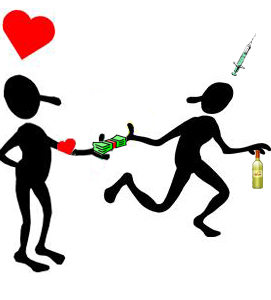 One of the most insightful books that i have read dealing
with the complexity of the human mind actually focussed on addictions.
‘Addictive thinking’ was written by the renown Psychiatrist, Rabbi Dr Abraham J Twersky, and in it he
attempts to explain the distorted logic of the addict; rationalising their behaviour,
defining triggers and situations that lead the addict down the
inevitable path of regression.
One of the most insightful books that i have read dealing
with the complexity of the human mind actually focussed on addictions.
‘Addictive thinking’ was written by the renown Psychiatrist, Rabbi Dr Abraham J Twersky, and in it he
attempts to explain the distorted logic of the addict; rationalising their behaviour,
defining triggers and situations that lead the addict down the
inevitable path of regression.